
Solid Wood VS Plywood VS Particle Board: How to Reduce Furniture Cracking and Return Rates Based on MC%?
2026-03-18
Some furniture buyers mistakenly believe that the more expensive the material, the better. Is that really true? In fact, there is a hidden factor that leads to higher post-sales return rates—the climate adaptability of furniture materials.
That is to say, even if a brand chooses the finest materials, this single factor can still damage the furniture brand’s reputation.
Below is a performance comparison of three mainstream boards in extreme cold/dry (such as North American winter) and high-temperature/high-humidity (such as Southeast Asia) climates:
1. Core Data Comparison Table of Furniture Material Stability
| Board Type | Hygroscopic Expansion Rate (24h) | Climate Stability | Recommended Application Scenarios |
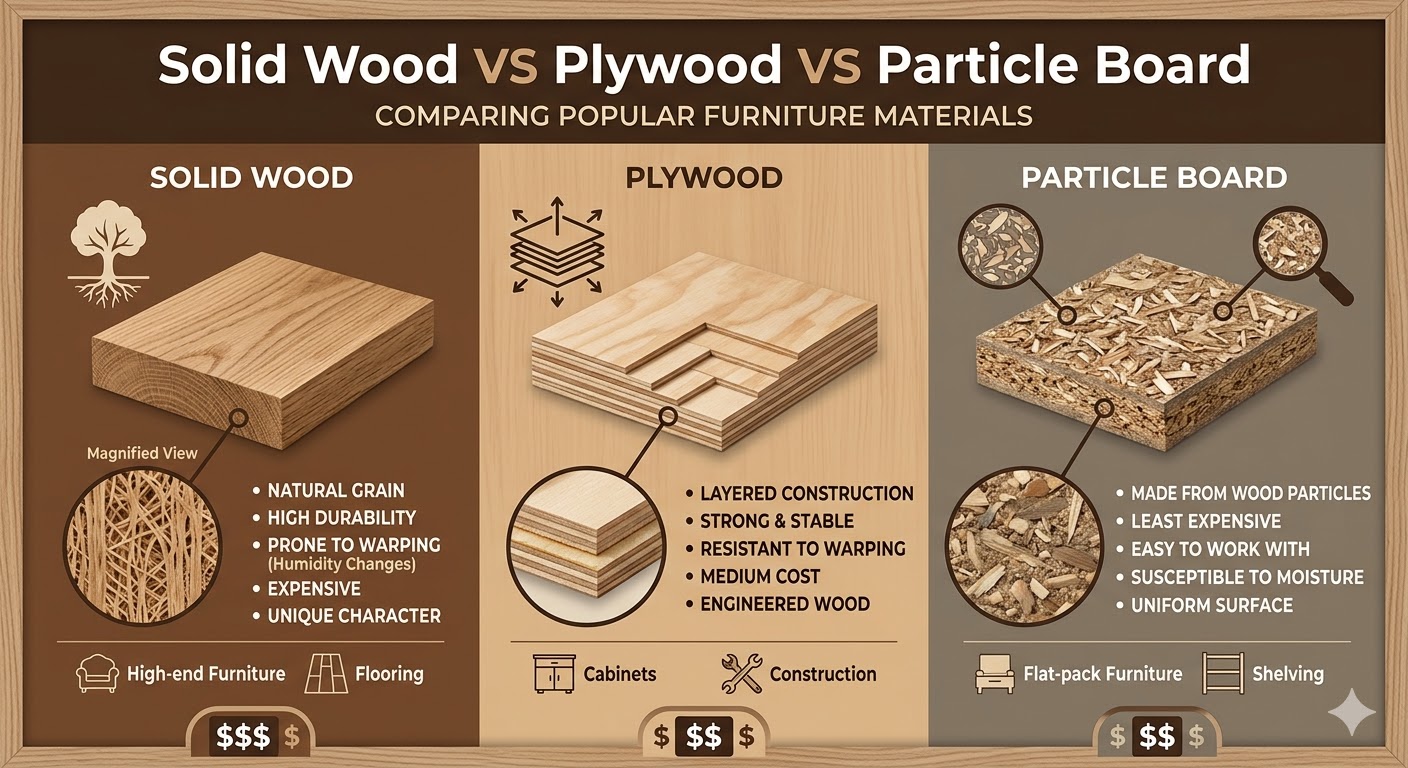
| Solid Wood | High (>10%) | Poor (Prone to cracking/warping) | High-end custom, indoor dry environments |
| Plywood | Medium (3%-5%) | Good (Cross-structure offsets stress) | Kitchens, bathroom cabinets, high-frequency office furniture |
| Particle Board | High (>15%) | Poor (Irreversible expansion after moisture) | Economical flat-pack furniture, temporary offices |
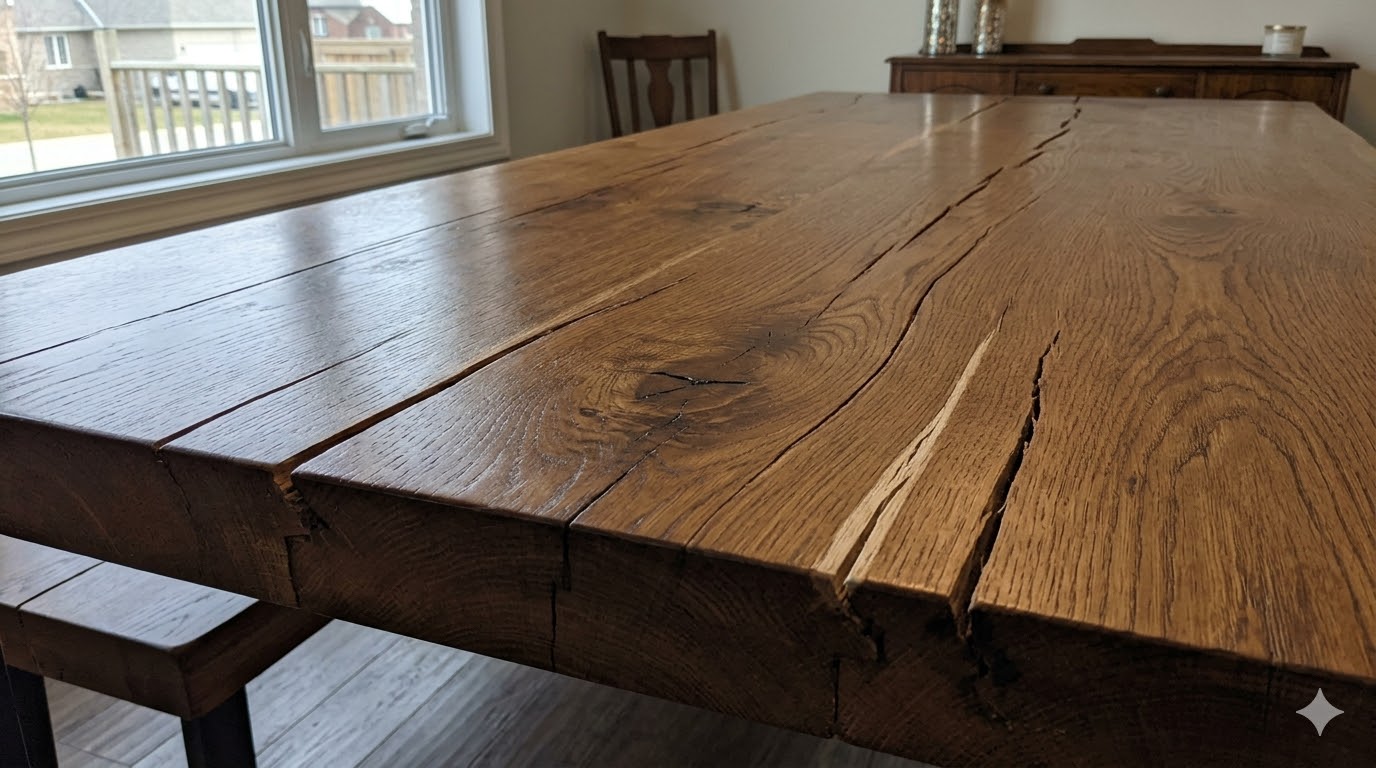
2. Solid Wood VS Plywood VS Particle Board: Deformation Mechanisms and Procurement Suggestions for Different Materials
Solid Wood
Solid wood has different longitudinal and transverse shrinkage rates. When its moisture content fluctuates by more than 3%, the "internal stress" of the wood may cause the tabletop to split.
Professional Pitfall Avoidance:
To adapt to the characteristics of solid wood furniture, professional manufacturers perform "Secondary Drying" + "Equilibrium Treatment" based on the actual conditions of the destination.
How to Execute "Secondary Drying" and "Equilibrium Treatment":
Before assembly, parts are placed in a steam drying room to slowly cool and dehumidify, eliminating internal stress. Equilibrium treatment involves storing the dried wood in a controlled constant temperature and humidity warehouse for more than 72 hours.
Global Main Market Wood Moisture Content (MC%) Reference Table
| Target Market | Recommended MC | Climate Characteristics | Key Tips |
| North America (USA/Canada) | 6% - 9% | Long-term indoor AC/heating, extremely dry. | Strictest region. If over 10%, horizontal cracks occur easily upon arrival. |
| Europe (Western/Northern) | 8% - 10% | Temperate maritime/continental, balanced humidity. | UK and Nordic winters are dry; 8% is recommended. |
| Middle East (Dubai/Saudi) | 6% - 8% | Tropical desert, extremely arid. | Requires deep "secondary drying" to prevent joint loosening from dehydration. |
| Southeast Asia (SG/MY) | 12% - 15% | Tropical rainforest, year-round high heat/humidity. | MC too low (e.g., 8%) will cause expansion and paint cracking upon arrival. |
| China (North/South) | 8% - 12% | Dry North (8-10%), Humid South (10-12%). | Cross-regional sales require fine-tuning based on destination. |
Plywood
If furniture adopts an odd number of veneer layers paved in a cross-grain manner, the internal stresses of the wood can offset each other.
When facing extreme temperature differences, its linear expansion coefficient is much lower than solid wood, reducing the risk of cracking. Therefore, it is the preferred material for project procurement in North America and Europe.
Quality Detail:
When purchasing plywood furniture, ensure that WBP (Water Boiled Proof) glue is used. WBP glue ensures no delamination even in humid sea freight environments.
Particle Board
The interior of particle board consists of wood chips, which are prone to irreversible expansion when damp. Specifically, once the screw holes expand, the furniture is scrapped.
Procurement Red Line:
If you must purchase particle board furniture, require the manufacturer to use High Moisture Resistance (HMR) substrates and cover them with High-Pressure Laminate (HPL) edging.
3. Packaging Moisture-Proof Strategy
Strictly Prohibit Bare Shipping: During sea freight, humidity in containers fluctuates wildly (salt spray and condensation).
Technical Measures: Must use PE pearl cotton wrapping + anti-mold stickers + silica gel desiccants, and ensure the outer box is tape-sealed to cut off external moisture interference.
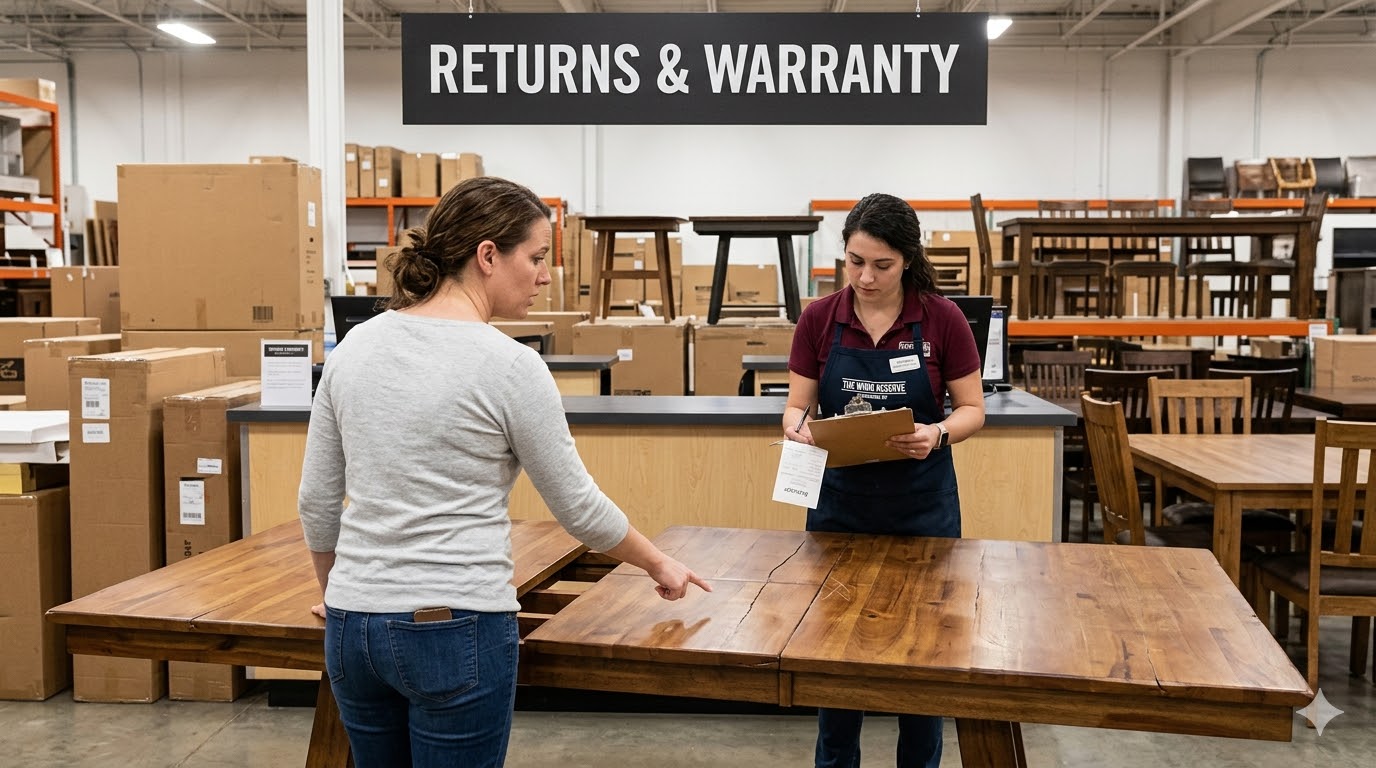
4. Expert Procurement Strategy: Solid Wood, Plywood, or Particle Board?
If we are entering the Arizona market, consider: this place is extremely dry year-round; solid wood furniture products must be equipped with reinforced "expansion joint designs" to reduce cracking rates.
However, if entering the Nordic or German markets, Plywood combined with PUR Laser Edge Banding will be more competitive.
| Dimension | Solid Wood | Plywood | Particle Board |
| Typical Market | USA (Arizona, Nevada) | Northern Europe, Germany | Global standardized office furniture |
| Core Challenge | Extreme dryness (Humidity <20%) | High eco-standards (EN 13986) | Edging quality (Moisture-proof/Aesthetics) |
| Essential Process | Reinforced Expansion Joints | PUR Laser Edging | Automated cutting and edging |
| Stability | Prone to cracking/warping | Cross-grain structure, extremely stable | Stable structure, poor local pressure resistance |
| Eco-Grade | Natural low-aldehyde (Focus on VOC) | Must reach E0 or F4-star | Must comply with CARB P2 or higher |
About the Author: Paul Sterling, Furniture Export & Supply Chain Expert.
With 14 years of experience in the furniture industry, Paul is an expert in international furniture compliance standards, technical R&D, and global logistics optimization.
More furniture manufacturer lists:
-
How to Wholesale Modern Contemporary Furniture? 7 Ways to Find a Modern Furniture Wholesaler
-
3 Ways to Easily Find Quality Home Decor Wholesale Vendors & Distributors
-
How to Find a Safe and Potential Baby Furniture Supplier? 7 Methods
-
5 steps for restaurant furniture wholesale e-commerce marketing
-
Top 5 Long-Lasting Public Chair Manufacturers with Durable Products in China
-
Top 6 China’s Economical Stainless Steel Furniture Manufacturers and Suppliers at CIFF 2026
-
Top 21 Malaysian Home Furniture Manufacturers: Muar Hub Exporters List
-
How to Identify Furniture Trading Intermediaries? Vet Cross-Border Suppliers from 5 Aspects