
Smart Mattresses & AI Sleep: Growth Points in the 2026 Smart Home Market
2026-03-20
As the first quarter of 2026 has not yet ended, as a professional deeply involved in the furniture supply chain and industry exhibitions, I see the future direction of the smart bedroom market shifting toward AI-based "active intervention."
Before the AI wave, smart mattresses primarily relied on various sensors to detect user states and make adjustments. Today, they are becoming one of the primary AI interaction terminals in the smart home—and they are increasingly critical because humans spend at least one-third of their day in the bedroom. It can be said that whoever satisfies the customer's ultimate sleep needs will seize the market opportunity of the future.
The following are several observations on the growth points of the 2026 smart sleep market from the perspective of an industry technical developer:
Comparison: 2026 Sleep Technology Generations
| Dimension | Conventional Smart Mattress (2.0) | AI Active Sleep Terminal (3.0) |
| Core Logic | Post-Sleep Reporting (Reactive) | Real-time Intervention (Proactive) |
| Adjustment Method | Preset modes (Manual or Scheduled) | Agentic AI millisecond closed-loop adjustment |
| Monitoring Precision | Basic pressure sensors / Respiration rate | mmWave Radar / Clinical-grade BCG |
| Ecosystem | Standalone mobile App for data viewing | Matter Protocol Smart home "Sleep Hub" |
| Acoustic Environment | Fixed-frequency white noise loops | Generative Dynamic Audio (HRV-linked) |
| Supply Chain | Integrated design (High replacement cost) | Modular Design (Upgradable AI modules) |
1. Smart Mattresses Will Provide "Real-Time Intervention" for Human Sleep
In recent years, users have grown tired of morning reports that merely ask, "Did you sleep poorly last night?" Such reports do not provide a solution; they are merely post-mortem data that fail to meet the fundamental human need for deep sleep.
According to the latest "2026 Global Sleep Survey Report" released by ResMed, over 50% of global respondents believe that "good sleep" is more important for longevity than diet or exercise. However, despite high awareness, most people worldwide only manage to enter deep sleep four nights a week. Therefore, this industry pain point will be the focus of future consumer willingness to pay.
Based on this data, I believe the explosion point for the 2026 market lies in active real-time adjustment.
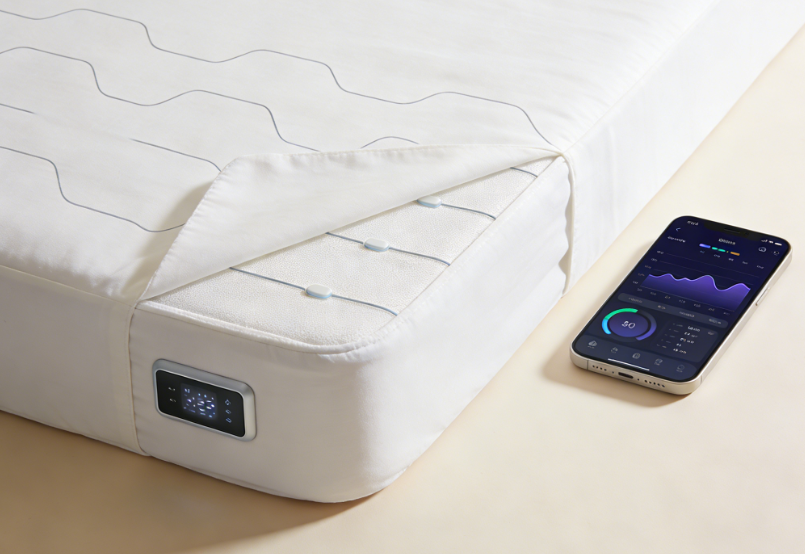
Currently, smart mattresses can utilize millimeter-wave radar and closed-loop control. By integrating non-contact sensors combined with edge computing, the mattress can detect when you enter "light sleep" or begin "snoring" and adjust the mattress tilt or IFD (Indentation Force Deflection) values within milliseconds. Silently and seamlessly, the smart mattress optimizes your sleep environment.
Furthermore, smart mattresses can solve frequent complaints about a mattress being too hard or too soft through adaptive firmness. Since physiological perceptions vary from person to person, manufacturers previously struggled to satisfy everyone's subjective feelings.
By utilizing built-in micro-airbag arrays, smart mattresses now change support levels in real-time based on your skeletal pressure distribution after you toss or turn—a feature that has become a standard for high-end furniture products at CES 2026.
2. Promoting Sleep via AI-Generated Acoustic Environments
AI intelligence is being applied more extensively in mobile applications.
Some apps use Agentic AI sleep engines to automatically generate the music users currently need. Instead of looping fixed white noise, it generates dynamic audio streams based on your heart rate, local geographic location, weather, and real-time EEG data.
Combined with these applications, if integrated through small beam-forming speakers at the headboard, AI can provide two people sharing a bed with completely different auditory environments—one falling asleep to deep-sea low frequencies while the other enjoys a focus-oriented environment optimized for ADHD, without interfering with each other.
Additionally, I must point out that AI sleep monitoring must prioritize privacy protection. For instance, employing Edge AI ensures that all raw physiological data is encrypted and processed locally on the mattress, with only anonymized predictive models being uploaded. This is crucial for protecting individuals with sub-health issues or specific medical conditions, as it addresses user concerns regarding privacy.
3. The "Sleep Hub" of the Whole-House Intelligence
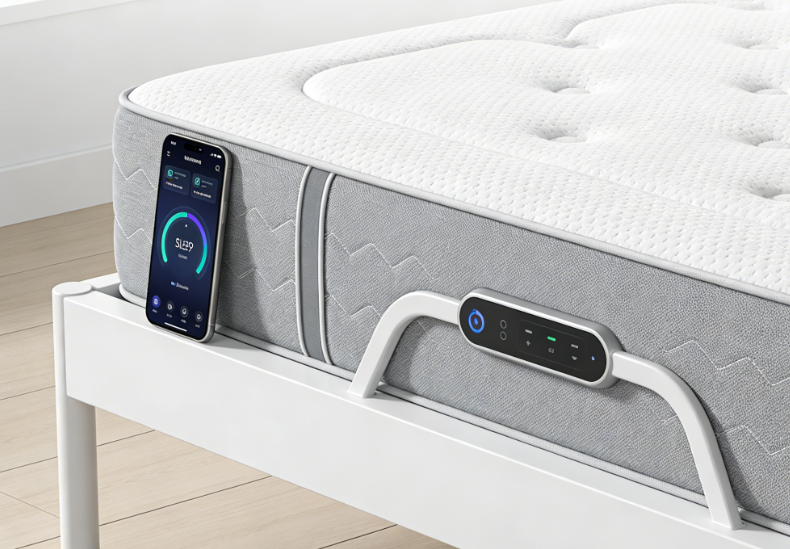
In the 2026 smart home ecosystem, the smart mattress is poised to become the "Sleep Hub" of the entire house.
Particularly noteworthy in 2026 is the deep implementation of the Matter protocol in smart bedrooms. Mattresses now achieve data interconnectivity with air conditioners and humidifiers via the Thread protocol. Based on this, once the smart mattress perceives you have entered deep sleep, it can automatically lower the room temperature to prevent you from catching a cold due to sudden nighttime temperature drops. It can also close the curtains to ensure you aren't awakened too early by the next morning's sunlight.
Furthermore, smart mattresses can implement long-term monitoring of physiological indicators, accumulating data for health early-warning purposes.
It is foreseeable that AI consultants in high-end smart mattresses will detect potential arrhythmias or sleep apnea trends earlier than you, playing a supportive role in health management.

4. Supply Chain Optimization Cannot Be Ignored
From the perspective of the furniture supply chain, the market structure has changed in 2026:
First, mattress manufacturers are now widely using highly breathable and recyclable bio-based materials to solve the issue of heat accumulation from electronic components within the mattress.
Additionally, while a smart mattress used to cost tens of thousands of dollars, the core AI control module is now separated from the comfort cushioning layer. Users can upgrade the latest AI sensing layer just like upgrading computer memory, while retaining a high-quality spring base.
Beyond the use of bio-based materials, we are focusing more on dynamic IFD compensation. In practical supply chain management, we found that traditional memory foam is prone to thermal fatigue; therefore, high-end lines are shifting toward a composite structure of TPU inflation units and graphene heat-conduction layers.
For export-oriented enterprises, 2026 requires not only BIFMA testing but also attention to UL 2904. Smart mattresses are essentially "powered furniture," and fire ratings and electromagnetic radiation limits cannot be ignored.
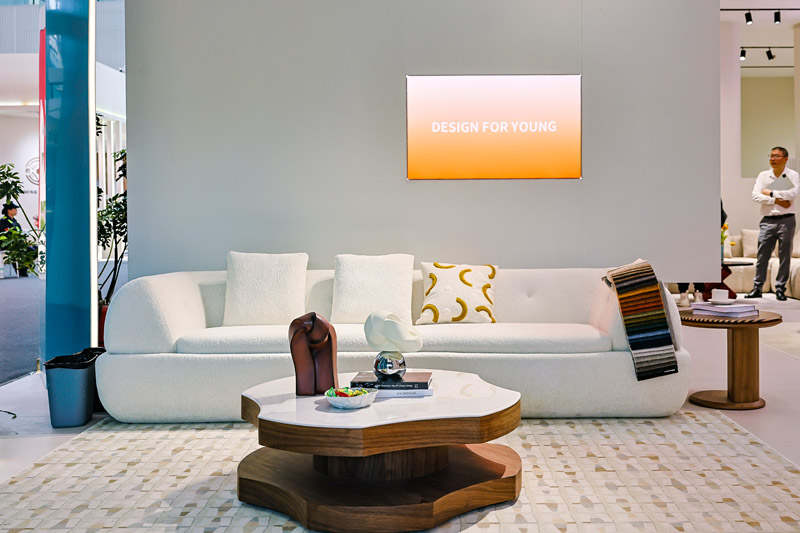
Furthermore, at the furniture exhibitions this March, I noticed that the inquiry focus of leading export factories has begun to shift toward "pre-embedded sensor technology." Brand merchants should pay close attention to this trend.
Conclusion:
If you are an investor or a brand owner, please pay close attention to the following two niche tracks in 2026:
1.Medical-grade monitoring in the Silver Economy, especially anti-bedsore and fall-detection alerts for the elderly, along with nighttime respiratory assistance.
2.Promotion of adolescent growth, focusing on "Learning-Growth" smart mattresses that combine spinal development monitoring with emotional regulation functions.
About the Author:
Eason, a graduate of Peking University, has been deeply involved in the global furniture supply chain for over 10 years and has spearheaded numerous B2B multinational procurement projects.
More furniture manufacturer lists:
-
How to Wholesale Modern Contemporary Furniture? 7 Ways to Find a Modern Furniture Wholesaler
-
3 Ways to Easily Find Quality Home Decor Wholesale Vendors & Distributors
-
How to Find a Safe and Potential Baby Furniture Supplier? 7 Methods
-
5 steps for restaurant furniture wholesale e-commerce marketing
-
Top 5 Long-Lasting Public Chair Manufacturers with Durable Products in China
-
Top 6 China’s Economical Stainless Steel Furniture Manufacturers and Suppliers at CIFF 2026
-
Top 21 Malaysian Home Furniture Manufacturers: Muar Hub Exporters List
-
How to Identify Furniture Trading Intermediaries? Vet Cross-Border Suppliers from 5 Aspects