
Beyond Comfort: What Are the Downsides of Recliner Sofas?
2026-03-20
With over a decade in the furniture supply chain, I’ve reviewed countless B2B export return claims. The reality is that most issues stem from overlooked details.
I have to be honest with you: recliners are often the most "function-heavy but detail-light" products in the furniture industry. You might spend only 5 minutes test-sitting in a showroom, feel like you're on a cloud, and make the purchase—only to regret it once it’s in your home. This is exactly why recliners see such high post-purchase return rates.
Is comfort enough? What are the actual downsides of a recliner sofa? From a professional standpoint, I’m breaking down the most common traps you must read about before buying.
Budget vs. Professional Grade Reclining Sofas
| Feature | Budget Recliners (The Trap) | Professional Grade Recliners |
| Wall Clearance | Requires 20cm+ (Wasted space) | 5-8cm (Wall-hugger Technology) |
| Frame Material | < 2.0mm Carbon Steel (Prone to warping) | > 2.5mm Alloy Steel (Structural stability) |
| Lumbar Design | Fixed/No support (Hammock Effect) | Adjustable (Power Lumbar) |
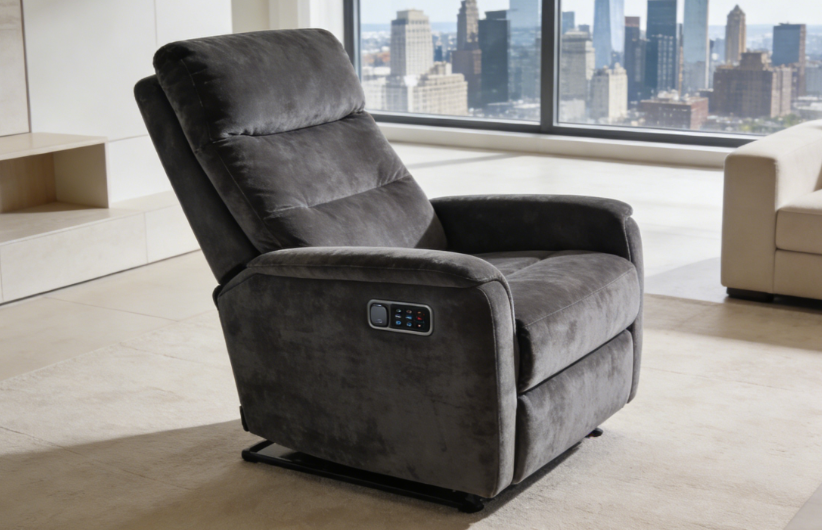
1. Space Constraints: The Underestimated Footprint
Most people measure their living room based on the sofa's "closed" dimensions but forget to account for it when fully extended. This often results in a sofa that simply doesn't fit the flow of the room.
In my experience, traditional recliners require at least 20cm of clearance from the wall to allow the backrest to tilt. If you have a smaller space, that 20cm becomes wasted, dust-collecting dead space.
Pro Tip: Always ask for "Wall-hugger" technology. Well-engineered recliners can fully extend with only 5cm of wall clearance, which is a game-changer for compact layouts.
2. Beware of "Structural Fatigue"
Unlike traditional couches, a recliner is essentially a "machine wrapped in leather."
Low-end manufacturers cut costs by using thin carbon steel for the scissor mechanism. After about a year of use, the frame can warp, leading to an asymmetrical look when the sofa is retracted.
Pro Tip: Check the thickness of the hardware. High-quality mechanisms are thicker, feature rust-resistant powder coating, and use nylon gaskets at bolt connections to reduce friction and noise.
3. The "Hammock Effect": A Silent Threat to Your Spine
Aside from space and durability, my biggest concern is the "Hammock Effect." Many sofas marketed for their "pillowy" feel actually compromise spinal health.
During my factory audits, I've found that some makers use ultra-low density foam (below 25kg/m³) to create that immediate "sink-in" feeling. While it feels great in the showroom, the lack of support causes your lower back to sag when the recliner is open.
For professionals who spend long hours reading or watching movies, this pressure on the lumbar discs is actually higher than sitting on a firm chair.
Pro Tip: Always ask about foam density; the core support layer should be at least 35D. For optimal health, look for models with Power Lumbar adjustment to ensure solid support at every angle.
4. The Hygiene "Black Hole"
To allow for movement, recliners require gaps between the seat and armrests, which quickly become hygiene blind spots.
Anyone who has ever dismantled an old recliner knows the base can become a graveyard for coins, crumbs, and even pests. If you have children or pets, these hidden spots require extra attention.
Pro Tip: Opt for designs with a fully enclosed chassis or removable seat cushions for easier maintenance. If you already own a model with gaps, use a crevice tool attachment to vacuum weekly and apply a dry leather lubricant to prevent friction noise.
5. Mechanical "Shear Points" Risk
For households with kids or pets, the mechanical underside of a recliner poses a genuine safety risk.
When retracting the footrest, the metal frame generates significant "shear force." In my years in the industry, I've seen unfortunate cases of pinched fingers or paws.
Pro Tip: Modern high-end recliners feature anti-pinch sensors or full-enclosure dust covers to prevent limbs from entering the mechanism area.
Conclusion
What are the downsides of a recliner sofa? Like any furniture, there are trade-offs. You don't have to avoid recliners, but you must look beyond the "softness." By avoiding these five traps, you can ensure your investment is as durable and healthy as it is comfortable.
About the Author:
Eason, a graduate of Peking University, has been deeply involved in the global furniture supply chain for over 10 years and has spearheaded numerous B2B multinational procurement projects.
More furniture manufacturer lists:
-
How to Wholesale Modern Contemporary Furniture? 7 Ways to Find a Modern Furniture Wholesaler
-
3 Ways to Easily Find Quality Home Decor Wholesale Vendors & Distributors
-
How to Find a Safe and Potential Baby Furniture Supplier? 7 Methods
-
5 steps for restaurant furniture wholesale e-commerce marketing
-
Top 5 Long-Lasting Public Chair Manufacturers with Durable Products in China
-
Top 6 China’s Economical Stainless Steel Furniture Manufacturers and Suppliers at CIFF 2026
-
Top 21 Malaysian Home Furniture Manufacturers: Muar Hub Exporters List
-
How to Identify Furniture Trading Intermediaries? Vet Cross-Border Suppliers from 5 Aspects