
Why "Morandi Color" Kids' Beds Can Significantly Improve Bedtime Anxiety? (With Palette Schemes)
2026-03-26
In recent years, Morandi-themed kids' room designs have become immensely popular among young parents.
This trend is driven by far more than just aesthetics; it is rooted in the psychological promotion of children's sleep—especially given that a significant proportion of children suffer from bedtime anxiety.
Studies show that approximately 20% to 30% of preschool children experience sleep issues [1]. Anxiety in children leads to elevated levels of stress hormones (such as cortisol), keeping the child in a state of "hyper-arousal" [2].
Child psychologists have discovered that children are extremely sensitive to color identification, particularly high-saturation and high-brightness light. Using colors that are "glaring" to a child can overstimulate the cerebral cortex and disrupt their sleep.
Color Psychology of Kids' Beds
From the perspective of color psychology, color acts as an emotional regulator. For instance, seeing red or orange can increase heart rate. Therefore, in gaming environments, red is often used to trigger high brain excitement and improve performance.
Conversely, low-saturation blues and greens can lower blood pressure and provide a sense of stability. This explains why we feel a profound inner peace when looking at the deep sea or the night sky [3].
In children, color perception is more pure and direct than in adults. Overly cluttered or high-contrast colors can be felt as intense "visual noise," increasing feelings of insecurity.
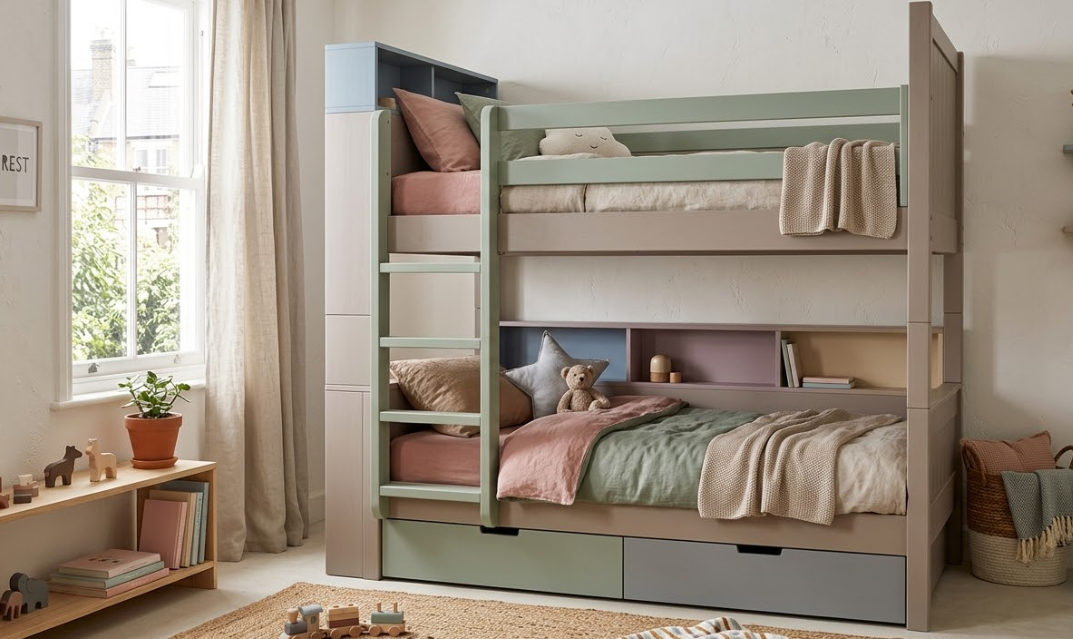
Table: Colors That May Trigger Insecurity in Children
| Color Category | Visual Presentation | Psychological Impact (Source of Insecurity) | Typical Negative Reaction |
| High Saturation Red | Intense visual impact | Mimics "warning" or "blood" signals; stimulates the sympathetic nerve. | Irritability, over-excitement, hyperactivity before bed. |
| High Brightness Neon | Glaring yellow, green, pink | Overloads the retina; creates a "noisy" sensory interference. | Distractibility, sense of spatial disorientation. |
| Pure Black / Deep Purple | Oppressive, swallowing | Evokes "black holes" or the "unknown"; amplifies primal fear of the dark. | Timidness, increased nightmares, refusal to stay alone. |
| High Contrast Pairs | E.g., Black/Yellow stripes | The brain constantly processes conflicting signals, leading to fatigue. | Restlessness, crying, lack of cooperation. |
| Cluttered Graffiti | Illogical color mixes | Disrupts the sense of "environmental order," making the space feel uncontrollable. | Psychological defense mechanisms triggered; resistance. |
3. Color Chart for Promoting Children's Sleep
To create a favorable environment for sleep, consider the following color categories:
| Color Category | Recommended Colors | Psychological Utility |
| Soft Blue | Mist Blue, Gray Blue | Lowers heart rate; mimics dusk; induces melatonin secretion. |
| Healing Green | Sage Green, Bean Paste Green | Reduces eye fatigue; provides a sense of security (nature-like). |
| Warm Neutrals | Cream, Oat | Provides a "hug-like" warmth; non-aggressive. |
| Quiet Purple | Light Lavender | Soothes the nervous system; reduces nightmare anxiety. |
4. Choosing a Kids' Bed: What is the Morandi Palette?
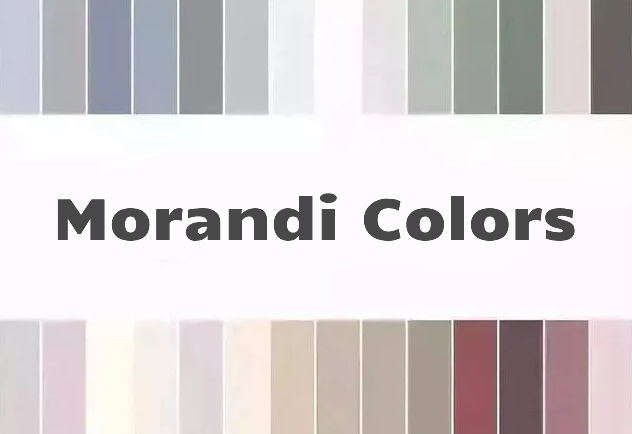
The Morandi color system originates from the Italian painter Giorgio Morandi. Its core characteristics include:
-
Low Saturation: All colors appear as if covered by a layer of "premium gray."
-
Color Balance: Strips away the "aggression" of original colors; colors do not conflict with one holder.
-
Non-Intrusive: The visual tone is peaceful, presenting a static and soothing sensation.
Morandi Kids' Bed / Floor Bed Brand List
| Brand Name | Style Positioning | Signature Morandi Colors | Advantage / Scenario |
| Oliver Furniture (Denmark) | Top-tier Nordic Minimalist | Oak, Pearl Gray, Mist White | Elegant design; emphasizes "grow-with-me" modularity. |
| Ferm Living (Denmark) | Modern Artistic | Sage, Sand, Gray Blue | "Little Architect" series; pure colors for aesthetic education. |
| Little Flo (Germany) | Montessori Professional | Matte Blue, Lilac, Rock Gray | Focuses on Floor Beds; safe height and sleep-inducing tones. |
| Sprout Kids (USA) | Official Montessori Feel | Birch, Low-sat Neutral Gray | Minimalist structure; aligns with self-reliance; eco-friendly finishes. |
| BusyWood (International) | Creative Solid Wood | Morandi Pink, Forest Green | Mostly House Beds; supports various low-chroma custom colors. |
| Crate & Kids (USA) | Modern Home | Smoke Blue, Charcoal, Oat | Sophisticated style; blends with adult decor; reduces visual noise. |
| Comagic (China) | Mass Modern | Gray Pink, Gray Blue, Cheese | Popular brand; recent "Macaron-Morandi" solid wood series. |
| Linspy (China) | Trendy / Value | Milk Coffee, Mist Blue | Fast updates; Morandi upholstered beds for smaller spaces. |
5. Why can Morandi-colored beds improve bedtime anxiety?
A. Lowering the Visual Stimulus Threshold
High concentrations of bright red or lemon yellow stimulate our nerves. Morandi colors, by contrast, act like a "whisper," gently lowering the child's visual excitement and allowing the nervous system to switch to "rest mode."
In many poorly designed kids' rooms, bedrooms are filled with high-saturation "cartoon red." In psychology, this is a "warning color"—it might not bother a child during the day, but it is detrimental to sleep. My recommended solution is often to replace the headboard backdrop with a Morandi Mist Blue, reducing the environmental light reflectance. When the child enters the room, the brain receives a signal: "The environment is quiet; prepare for landing."
B. Establishing Psychological Safety Boundaries
Morandi beds consist primarily of colors found in nature—stone, wood, earth, and shadow. These natural tones reduce the fear of the dark [4].
C. Optimizing the Melatonin Secretion Environment
Morandi bedding has low reflectance and neutral tones, reducing blue light interference with the retina. This optimizes melatonin secretion and helps children maintain a natural circadian rhythm [5]. For example, using Sage Green and Terra Cotta can tap into a child's intuition of "forest and earth," significantly improving the sleep environment.
D. Reducing Spatial Oppression
Montessori education emphasizes "natural order." Morandi colors are not only more natural but also highly consistent. This makes a small kids' bed area appear organized, helping the child establish a protected "psychological private territory."
In my own kids' room renovation, I used the brightness contrast between an Oat-colored rug and Gray-Blue walls. This clearly outlined the boundary of the "sleep zone." This visual order gives my child a much greater sense of security.
Kids' Sleep Space: Morandi Palette Table
| Scheme Name | Primary (Wall/Large) | Secondary (Bedding/Rug) | Accent (Decor/Detail) | Core Utility |
| Forest Healing | Light Sage Green | Oat White | Gray Bean Green | Lowers heart rate; calms anxiety. |
| Quiet Deep Space | Mist Gray Blue | Pearl Gray | Soft Beige | Mimics dusk; aids melatonin. |
| Warm Sun Hug | Creamy Brown | Light Terra Cotta | Natural Wood | Provides warmth; reduces loneliness. |
| Cloud Minimalist | Warm Gray White | Light Lavender | Gray Blue | Extremely pure; reduces brain triggers. |
Minimalist Execution Guide (The 3-2-1 Rule)
-
3 Colors: Total colors in a space should not exceed three.
-
2 Degrees: All colors should be low-to-medium saturation (appearing "muted" or "grayed out").
-
1 Main: Select only one color as the visual focus; others serve as supplements.
About the Author: Julian Guo
Mr. Guo is an author specializing in child development psychology and a graduate of the Department of Child Education at South China Normal University. As a promoter and researcher of the Montessori method, he is dedicated to reshaping children's self-efficacy through the logic of physical space.
References
[1] Owens, J. A. (2005). Epidemiology of sleep disorders during childhood. Seminars in Pediatric Neurology.
[2] Kurt, S., & Osueke, K. K. (2014). The Effects of Color on the Moods of College Students. SAGE Open.
[3] Elliot, A. J., & Maier, M. A. (2014). Color psychology: Effects of perceiving color on psychological functioning in humans. Annual Review of Psychology.
[4] Montessori, M. (1966). The Secret of Childhood.
[5] Brainard, G. C., et al. (2001). Action spectrum for melatonin regulation in humans: evidence for a novel circadian photoreceptor. Journal of Neuroscience.
More furniture manufacturer lists:
-
How to Wholesale Modern Contemporary Furniture? 7 Ways to Find a Modern Furniture Wholesaler
-
3 Ways to Easily Find Quality Home Decor Wholesale Vendors & Distributors
-
How to Find a Safe and Potential Baby Furniture Supplier? 7 Methods
-
5 steps for restaurant furniture wholesale e-commerce marketing
-
Top 5 Long-Lasting Public Chair Manufacturers with Durable Products in China
-
Top 6 China’s Economical Stainless Steel Furniture Manufacturers and Suppliers at CIFF 2026
-
Top 21 Malaysian Home Furniture Manufacturers: Muar Hub Exporters List
-
How to Identify Furniture Trading Intermediaries? Vet Cross-Border Suppliers from 5 Aspects