
Dining Room Furniture Buying Guide: How to Choose a Dining Table
2026-05-25
Dining tables rank among the most frequently used furniture pieces at home.
When making a selection, you need to consider not only whether its appearance matches your interior style, but also cleaning convenience. It is equally important to factor in household size and room dimensions to avoid making the dining area cramped.
If you often struggle with making purchase decisions, this practical guide will walk you through the whole selection process. Follow these three key steps to find your ideal dining table.
Step 1: Determine Table Size and Shape
How to measure for the proper table size
Before purchasing large furniture, measure the length and width of your dining room first. Leave a clearance of 90 to 120 centimeters around all sides for easy movement.
The remaining space defines the maximum feasible size for your dining table. Never exceed this limit. An oversized table will ruin spatial proportion, crowd out the room and hinder daily access.
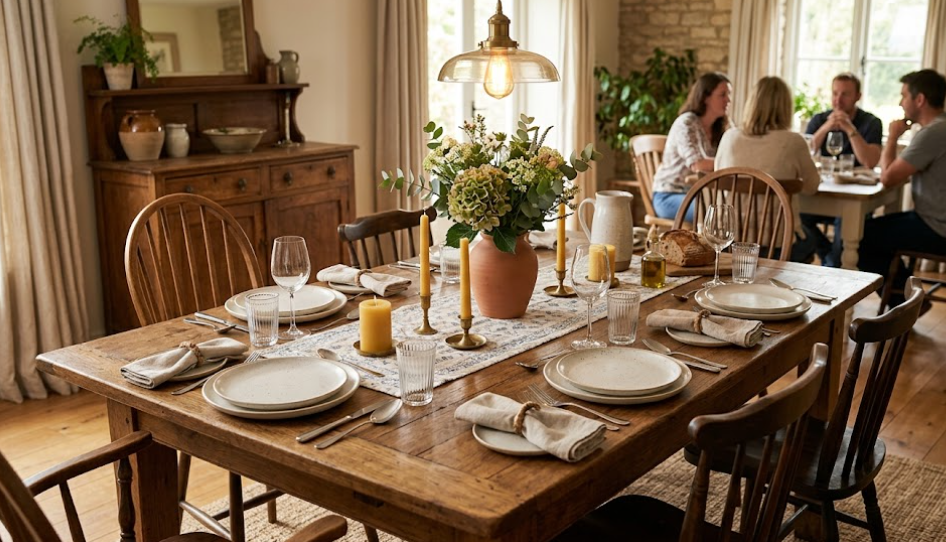
Pick the suitable table shape
Long and narrow dining rooms work best with rectangular or oval tables. They can seat more people and maintain balanced visual proportions.
Square-shaped dining spaces pair well with round tables. This design creates a cozy atmosphere, and rounded edges effectively reduce injury risks for young kids.
Step 2: Confirm Seating Capacity
As a general standard, allocate 60 centimeters of table space per diner.
4-seater: Minimum 120cm for rectangular tables; minimum 90cm diameter for round tables
6-seater: 150cm to 180cm for rectangular tables; 120cm to 140cm diameter for round tables
Step 3: Choose Tabletop Material
Solid wood: Timeless and durable, requires regular moisture and heat protection.
Sintered stone & marble: Highly scratch-resistant and heat-proof, ideal for modern decor, yet feels cool to the touch.
Glass surface: Effortless to clean, boosts visual openness for compact homes, and needs heat damage prevention.
Practical Dining Table FAQs
Q1: What is the standard height of a dining table?
A: Standard dining tables stand 75 to 78 centimeters tall. Matching dining chairs usually have a seat height of around 45 centimeters. A 30-centimeter gap between the tabletop and chair seat offers the most comfortable dining experience.
Q2: What size rug fits under a dining table?
A: The rug should extend 60 to 90 centimeters beyond the table edges. Ensure all four chair legs stay fully on the rug even when pulled out for seating, preventing tipping accidents caused by catching on rug borders.
Q3: How to clean a solid wood dining table?
Daily care: Wipe along the wood grain with a slightly damp soft cloth, then dry the surface right away.
Stain removal: Use diluted neutral detergent for grease marks. Avoid alcohol and harsh alkaline cleaners.
Maintenance: Apply wood wax or specialized furniture polish every six months.
Q4: Styling tips for dining tables
Layered decor: Vases and candle holders make classic decorative combinations.
Fabric accents: Elegant table runners and placemats instantly refresh the overall look.
Height control: Keep ornaments under 30 centimeters high so they do not block eye contact during meals.
Q5: Ideal hanging height for dining room chandeliers
A: Suspend the bottom of the chandelier 75 to 90 centimeters above the tabletop. Raise it slightly higher if you have exceptionally high ceilings. The light fixture diameter should be roughly 30 centimeters smaller than the table width.
Q6: Recommended clearance space around the table
Basic minimum gap: 90 centimeters between the table and walls or other furniture
Optimal comfortable space: 120 centimeters
Q7: Is sanding mandatory before repainting a dining table?
A: Yes. Even without stripping off the original finish, lightly sand the surface with 220-grit sandpaper. This roughens the smooth coating for better paint adhesion, preventing peeling within months.
Q8: Which paint type suits dining tables best?
Given frequent daily use, these two options are highly recommended:
Chalk paint: Great coverage with a matte finish, beginner-friendly and easy to apply.
Enamel paint: Forms a tough, scratch-resistant hardened layer that withstands bumps and simple wiping.
Q9: Is a protective top coat necessary after painting?
A: Definitely required. Regular paint cannot resist heat and scratches. Avoid oil-based polyurethane, as it tends to turn yellow over time.
Q10: Difference between repainting and refinishing
Repainting: Cover the natural wood grain entirely with opaque paint.
Refinishing: Strip old paint off, then apply wood stain or wood wax oil to retain and highlight original wood texture.
Q11: How to select proper wood stain
Oil-based stain: Delivers deep, rich color with strong penetration. It allows ample working time but dries slowly.
Water-based stain: Eco-friendly and odorless with fast drying speed. It may raise wood fibers, calling for finer follow-up sanding work.
References
1. Azka, M. A. (2026). Physical, Mechanical and Thermal Properties of Oil Palm Cellulose Nanofiber Filled Natural Fiber Reinforced Polylactic Acid Hybrid Composites for Sustainable Furniture. Journal of Natural Fibers.
2. Chen, H. F., & Tsai, C. Y. (2024). The Impact of School Classroom Chair Depth and Height on Learning Tasks. Education Sciences, 14(6), 661
3. Czujkowski, S. (2026). Spatial Challenges of One-Room Apartments in Poland: An Analysis Based on Selected Contemporary Polish Projects. European Research Studies Journal.
4. Du, T., Iwakiri, K., Sotoyama, M., Tokizawa, K., & Oyama, F. (2022). Relationship between using tables, chairs, and computers and improper postures when doing VDT work in work from home. Industrial Health, 60(4), 307-318. https://doi.org/10.2486/indhealth.2021-0222
5. Kotradyova, V., Vavrinsky, E., Kalinakova, B., Petro, D., Jansakova, K., Boles, M., & Svobodova, H. (2019). Wood and Its Impact on Humans and Environment Quality in Health Care Facilities. International Journal of Environmental Research and Public Health, 16(18), 3496. https://doi.org/10.3390/ijerph16183496
6. Williams, R. S. (1993). Durability of paint or solid-color stain applied to preweathered wood. Forest Products Laboratory.