
Public Airport Terminal Seating Selection Guide | Flammability & Wear Resistance Standards
2026-07-17
Airport terminal seating is far more than ordinary public furniture in new build or renovation projects. Subject to heavy foot traffic, these seats require careful evaluation not only for safety, but also space efficiency, passenger experience and long-term operational and maintenance expenses.
Many buyers cut corners on budgets and fall prey to typical misconceptions. This leads to frequent repairs and soaring maintenance bills down the line. Partnering with reputable airport furniture suppliers early in the planning phase can help procurement teams avoid these costly mistakes.
Below are the five most prevalent pitfalls in terminal seating procurement, along with practical tips to keep maintenance costs in check.
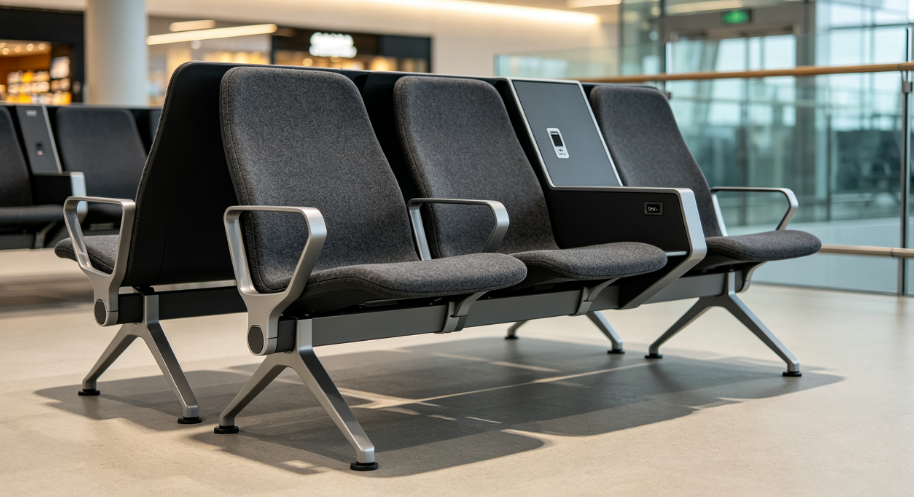
Pitfall 1: Overlooking Life Cycle Cost (LCC)
Most procurement teams focus solely on the upfront purchase price during tenders. Budget-friendly seats often use inferior aluminum alloys, thin-gauge steel or low-grade PU faux leather. Given intense daily use, chipped paint and cracked upholstery tend to emerge within just one to two years.
For bulk orders of airport seating, always calculate the total life cycle cost.
Life Cycle Cost (LCC) = Initial purchase price + Installation fees + Estimated maintenance costs + Replacement part expenses - Residual value
Premium seats made with high-grade alloys command a slightly higher upfront cost, yet boast a service life of 10 to 15 years and an extended maintenance-free period. Their daily operating cost is ultimately much lower than that of budget alternatives.
During the expansion of Terminal 2 at a certain airport, a batch of low-cost prefabricated upholstered seating was installed. Having underestimated the wear and tear from heavy daily passenger traffic, the facility saw extensive cracking across the PU leather upholstery by the second year of operation.
The airport was forced to set up a dedicated maintenance crew, and cumulative repair and replacement expenses over five years ended up exceeding the original procurement budget by more than double.
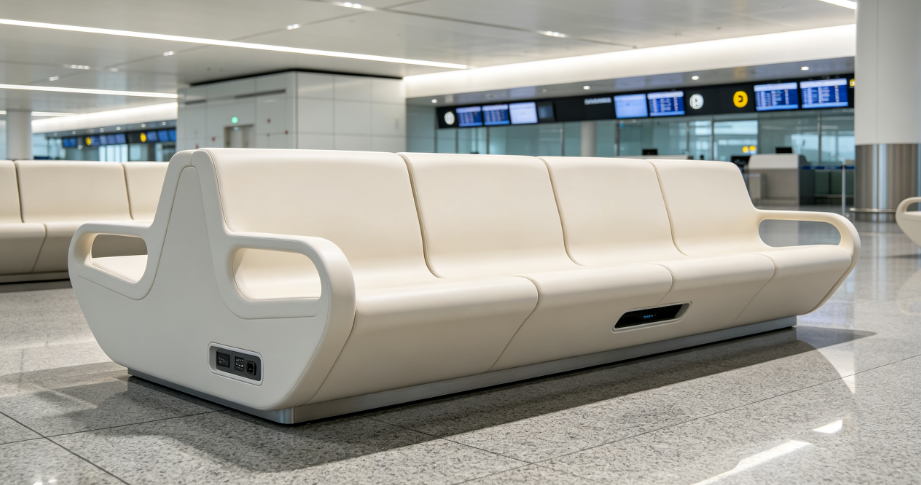
Pitfall 2: Prioritizing Aesthetics Over Practicality
Some terminals feature sleek, minimalist designs, prompting buyers to select seats with unconventional silhouettes. This approach often overlooks the harsh realities of public environments.
While visual warmth and branding can be enhanced by introducing specialized accents from home decor manufacturers, the primary terminal seating must remain hyper-focused on raw durability and safety.
First and foremost, airport seating must comply with international fire safety standards, such as BS 5852 Source 5 and CAL 133. Many stylish upholstered seats fail to pass rigorous flame retardant tests. Additionally, constant contact with luggage and sharp objects will quickly scuff and wear down surface finishes.
Safety shall come first in procurement. Require suppliers to provide official certifications including:
BIFMA X5.4 (General standard for public seating)
EN 16139 (Strength, durability and safety requirements for non-domestic seating)
Surface materials should also deliver resistance to UV rays, mildew and harsh chemical cleaners.
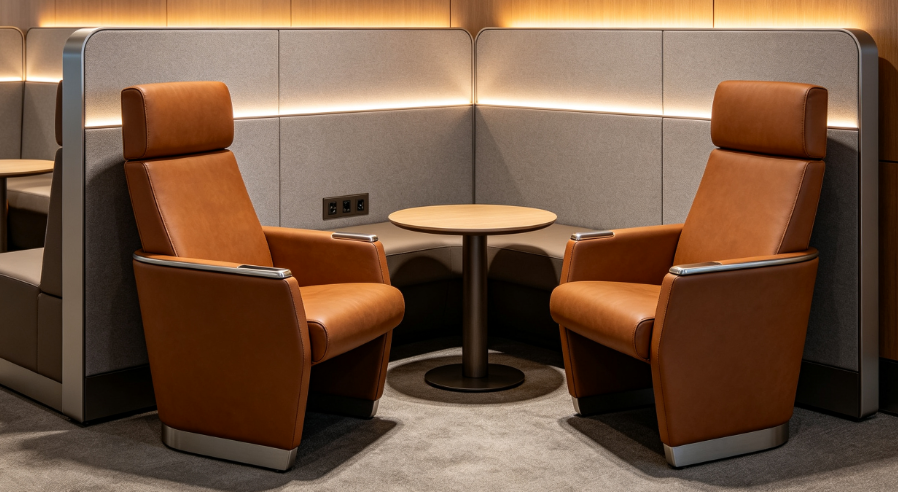
Pitfall 3: One-Piece Construction Leading to Full Replacement for Partial Damage
Buyers often opt for fully integrated seating with fixed beams and base assemblies that cannot be disassembled individually. The downside is costly: damage to just a single cushion means removing and replacing an entire row of 3 to 4 linked seats.
Modular, component-based designs are highly recommended. Individual seat pans, backrests and armrests can be detached and replaced separately, enabling fast on-site maintenance. A similar logic applies to educational facilities, where sourcing components from qualified student furniture manufacturers allows facility managers to swap individual desktop panels or chair shells rapidly without discarding the steel support frame.
Pitfall 4: Neglecting Fatigue Relief for Long-Haul Passengers
Some buyers prioritize sturdiness above all else, assuming heavy-duty build equates to maximum durability, while ignoring seating comfort. Flight delays and long layovers are commonplace. Rigid, non-ergonomic seats cause muscle soreness and back discomfort, resulting in poor passenger feedback.
For premium waiting zones or VIP lounges, designers often draw inspiration from high-quality living room furniture to bring residential-level comfort and support into the terminal environment.
Choose seats engineered with modern ergonomics, featuring scientifically contoured seat pans and backrests. Combine upholstered and hard-wearing rigid seats in transit zones and gate areas to enhance overall passenger satisfaction.
Big data analysis of global passenger behaviour compiled by Skytrax indicates that passenger dwell times in different zones should dictate seating specifications.
- At contact gate boarding areas, passengers wait an average of 30 to 45 minutes. Rigid one-piece moulded polyurethane (PU) chairs with ergonomically contoured profiles are suitable here.
- In transfer zones and long-haul departure lounges, layovers typically stretch 2 to 4 hours or longer. For these spaces, upholstered seating with high-resilience latex foam support is mandatory to lift overall passenger satisfaction scores for the transport hub.
Similarly, for airport concession zones and busy terminal food courts, sourcing commercial-grade products from robust China dining table suppliers ensures that heavy-use dining surfaces withstand constant sanitation while maintaining strict global compliance.
Pitfall 5: Lack of Forward Planning for Power and Cabling
In today’s digital travel era, charging ports have become a necessity for all passengers. Some older seating installations lack sufficient charging outlets or feature hardwired charging systems that cannot be upgraded.
Adding extra ports later requires floor trenching and rewiring across terminals, incurring substantial rework costs.
Select seating with beams fitted with concealed, dedicated cable routing channels. Charging modules should be standalone and pluggable, allowing easy upgrades to keep pace with future technological developments.
References
[1] ISO 15686-5:2017, Buildings and constructed assets — Service-life planning — Part 5: Life-cycle costing. International Organization for Standardization.
[2] BS 5852:2006, Methods of test for assessment of the ignitability of upholstered seating by smouldering and flaming ignition sources.
[3] Technical Bulletin 133 (TB 133), Flammability Test Procedure for Seating Furniture for Use in Public Occupancies.
[4] ANSI/BIFMA X5.4-2020, Public Space Seating - Tests. Business and Institutional Furniture Manufacturers Association (BIFMA), accredited by ANSI. General testing standard for public area seating furniture.
[5] EN 16139:2013, Furniture — Strength, durability and safety — Requirements for non-domestic seating.
[6] Airport Development Reference Manual (ADRM) & World Airport Survey Guidelines on Passenger Dwell Time and Amenities.
[7] NFPA 70, National Electrical Code (NEC). National Fire Protection Association (NFPA).