
CIFF Guangzhou 2027 Unveils Esports Seating Zone: High-End Ergonomics, Smart Tech & B2B Sourcing
2026-11-08
The 59th China International Furniture Fair (CIFF Guangzhou, March 28–31, 2027) will launch a standalone Esports Seating Zone within its Office & Commercial exhibition.
This strategic debut is far from an afterthought; it is a strategic response to the explosive growth of the global esports industry and the rising demand for entertainment-focused furniture.
I. Market Data Behind the New Esports Seating Zone at CIFF Guangzhou 2027
According to forecasts from leading research firms including Grand View Research and Coherent Market Insights, the global gaming chair market has expanded rapidly from approximately USD 1.25 billion in 2023 and is projected to surpass USD 2.48 billion by 2030, with a compound annual growth rate (CAGR) of 7.5%–8.8%.
North America (35%) and Europe (28%) currently represent the largest consumer markets for esports seating. The Asia-Pacific region (30%) — notably Southeast Asia, China and East Asia — is the fastest-growing market, posting annual growth above 11.2%.
This market expansion is fuelled by the worldwide proliferation of gaming. Newzoo’s Global Esports & Games Market Report records over 3.4 billion gamers globally, including more than 580 million core and casual esports audiences. As younger cohorts enter their peak spending years, spending on gaming and esports continues to climb.
Separate analysis of esports players and young remote workers shows these groups spend 6–10 hours seated each day, unlocking substantial market potential. Surveys indicate 84% of gaming chair buyers prioritise ergonomic support (lumbar and cervical protection) and fatigue relief as their primary purchase criteria. Other key requirements include striking aesthetics and advanced ergonomics, driven by rising concerns over lumbar disc issues and other sedentary-related health conditions.
Core Highlights: Three Innovation Tracks for the New Esports Seating Zone at CIFF 2027
1. Advanced Ergonomics & Enhanced Comfort
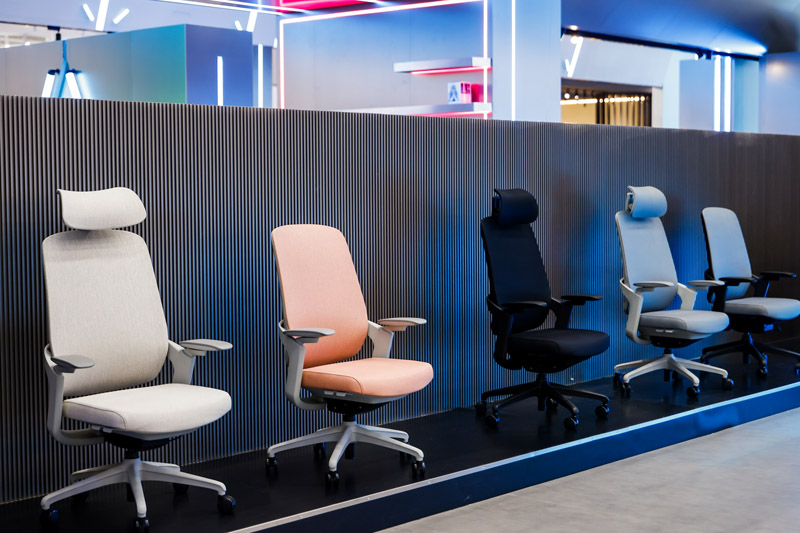
Solutions include multi-adjustable lumbar supports, dynamic spine-tracking support systems, high-density cold-cured foam and high-tension breathable mesh.
Henglin Home (Henglin Chair), a regular exhibitor in CIFF’s Office & Commercial halls, showcases dynamic lumbar-tracking gaming chairs and mesh seat shells.
DXRacer and AutoFull also present professional ergonomic esports chair lines fitted with modular adjustable lumbar cushions, 160° infinite-tilt recline mechanisms and swappable accessory kits such as footrests and magnetic headrests.
2. Smart Hardware & Customisation Technology
The zone features immersive gaming chairs built with integrated RGB lighting systems, immersive haptic feedback modules, Bluetooth speakers and intelligent heating & cooling climate control. Standout examples include AutoFull and Maidesite’s smart immersive seating cabins with RGB and haptic feedback systems.
Sihoo and Loctek bring differentiated technology centred on power-adjustable posture seats and electric noise-reducing lift systems.
3. Market Segmentation & Scenario-Focused Product Development
Differentiated seating solutions are engineered for distinct commercial use cases: chairs for professional esports tournaments and team training bootcamps, bespoke models for esports hotel suites, and modular immersive seating packages for home gaming corners.
Sourcing & Visit Tips
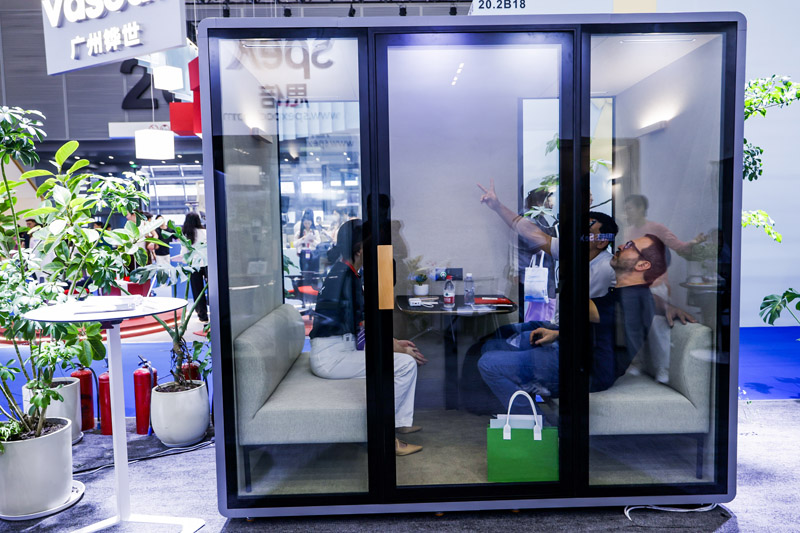
Dates & Venue: Phase 2, March 28–31, 2027, Canton Fair Complex (Pazhou), Guangzhou, inside the Office & Commercial halls.
Visitors are advised to combine the Esports Seating Zone with the modular office furniture displays and CIFM/interzum guangzhou’s smart hardware & machinery area to trace the full supply chain.
Core component suppliers such as Samhongsa and KGS supply gas lifts and control bases certified to ANSI/BIFMA X5.1 safety standards for gaming chairs.
Upstream CNC equipment makers and intelligent cutting & sewing specialists (such as TC & Buckle) will demonstrate flexible sampling lines, helping full-chair manufacturers lower MOQs for custom orders from esports teams.
Year-round Online Engagement: Before and after the show, buyers can connect with exhibitors from the Esports Seating Zone and schedule in-depth meetings via CIFF Click2Connect.
Additional B2B Commercial Data Supporting the New Esports Zone
Esports Hospitality Market
Focusing on China and Southeast Asia, more than 22,000 esports hotels operated across China by 2025–2026. This model is spreading into Southeast Asia (Vietnam, Thailand, Malaysia) and the Middle East at an annual rate of 15%–20%. A typical esports hotel contains 15–30 guest rooms with roughly 40–100 heavy-duty, customisable gaming chairs. Furniture replacement cycles are only 2–3 years, creating a repeat-heavy procurement market.
Office & Hybrid-Work Procurement
With Gen Z (born 1995–2010) accounting for over 30% of the workforce, tech firms, game studios, creative agencies and maker spaces are increasingly specifying ergonomic seating as a talent recruitment and retention tool.
Cross-Border Export Profit Metrics
On marketplaces including Amazon and Wayfair, mid-to-high-end gaming chairs retail for USD 250–600, while FOB factory prices for entry-level models range from USD 45–120. This translates to gross profit margins of 50%–200%, a major incentive for brand investment.
Synergy Data with CIFM/interzum guangzhou Smart Manufacturing
Among new esports seating models launching in 2027, an estimated 45% will feature integrated RGB ambient lighting, and 20% will carry premium modules with haptic feedback and Bluetooth audio. Supported by flexible production lines at CIFM/interzum guangzhou during Phase 2, participating factories can cut customisation MOQs — for team logo embroidery, custom leather colourways and special finishes — from the traditional 500 units per SKU down to 20–50 units per SKU.
Disclaimer
This article is compiled from the official press release of the 59th China International Furniture Fair. Show schedules, zone layouts, exhibitor rosters and showcased technologies are subject to change based on the organiser’s preparation progress. Always refer to the official CIFF Guangzhou website and on-site announcements for the latest updates.
References
- Official CIFF Guangzhou Website (Chinese): Pre-registration, floor plans and Phase 2 Office & Commercial updates for the 59th edition
- Official CIFF Guangzhou Website (English): Official CIFF press releases and international show information
- CIFF Click2Connect Online Sourcing Platform: https://click2connect.ciff-gz.com/ — the core B2B matchmaking system for CIFF’s 8+365 programme
- Official Website of CIFM / interzum guangzhou: Portal for furniture production machinery and components exhibition
- Mordor Intelligence Gaming Chair Market Research Portal: Market sizing and CAGR forecasts
- Newzoo Global Games & Esports Intelligence Platform: Gamer demographics, audience growth and Gen Z consumption reports
- Tom’s Hardware / TechRadar Esports Peripheral Coverage: Benchmarks for immersive seating and ergonomic gaming chair testing