
Hotel Pool Furniture Material Comparison: Aluminum, Teak vs. Wicker – Which Is Better?
2026-05-26
With over a decade of experience in the global trade of commercial outdoor furniture, I’ve often been asked by procurement managers: “When it comes to poolside furniture, which material works best: aluminum, teak, or woven wicker?”
Many hotels—especially coastal resorts—rely solely on catalog photos during the pre-opening phase without verifying technical certifications. The result? Within just two quarters, furniture starts cracking or leaking rust, ruining the guest experience and driving up operational costs. This guide analyzes materials based on real-world wear, maintenance costs, and ROI.
1. Material Selection Overview
The table below compares the four industry-standard materials across core functional dimensions:
| Material | Durability | Maintenance | Price Range | Key Advantages | Ideal Application |
| Aluminum | ★★★★★ | Very Low | Mid-range | Rust-proof, lightweight | High-turnover resorts |
| PE Wicker | ★★★ | Moderate | Budget-friendly | Vacation vibe, versatile | Social areas, boutique hotels |
| Teak | ★★★★★ | High | Premium | Natural luxe, timeless | Luxury 5-star properties |
| Mesh Strap | ★★★★ | Low | Mid-range | Breathable, quick-dry | Modern fitness pools |
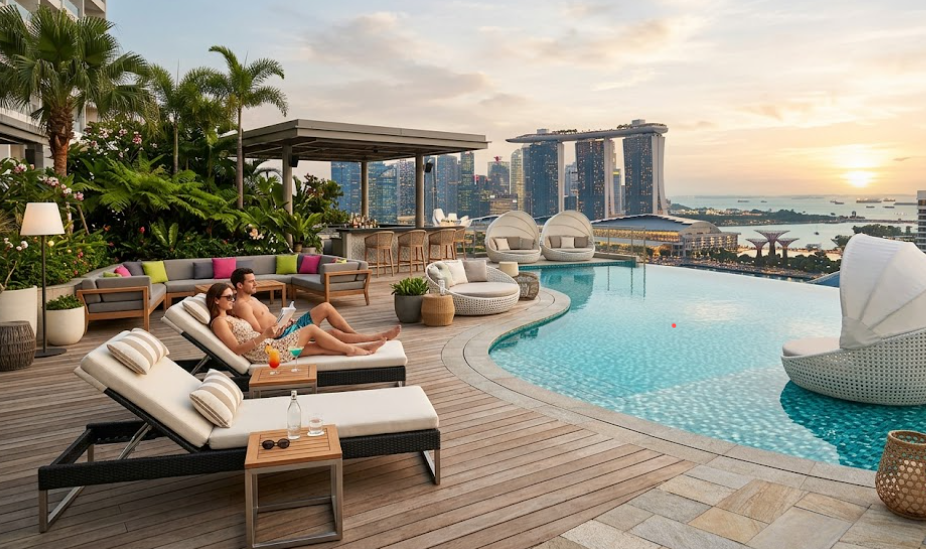
2. Deep Dive & Expert Insights
I. Aluminum: The ROI Champion
Aluminum is widely considered the most cost-effective choice for large-scale operations. Industry pioneer Richard Frinier, often called the "King of Outdoor Furniture," emphasizes that the material's value lies in its structural integrity. He notes that high-quality aluminum delivers the sturdiness of metal while maintaining superior corrosion resistance for over a decade [1].
When planning large-scale poolside renovations, material choice is only half the battle. Understanding the logistics of high-volume orders is equally critical. For a comprehensive walkthrough, see this guide on How to buy hotel furniture in bulk? 9 steps to wholesale cheap furniture, which outlines how to secure competitive pricing without compromising on these structural standards.
Expert Insight:
My on-site experience confirms this. Aluminum is a "set-and-forget" material. For resorts with 500+ rooms, staff cannot spend hours on furniture care. High-quality powder coating (such as Tiger Drylac) makes these pieces nearly immune to UV and chlorine.
Pro Tip:
Always specify fully welded construction. Avoid knockdown (bolt-together) units; in poolside environments, screw holes are the first points of oxidation and structural failure.
II. Burmese Teak: The Luxury Standard
For ultra-luxury brands like Aman or Four Seasons, synthetic materials often fail to convey the necessary warmth. Janice Feldman, founder of JANUS et Cie and a leading consultant for 5-star outdoor spaces, argues that teak is not a "disposable commodity" but an asset that becomes a "legacy piece" for a hotel [2].
The "Patina" Factor:
Teak contains natural oils that resist rot. Over a season, it oxidizes into a sophisticated silvery-grey. As Feldman notes, this change represents a "timeless charm" rather than wear and tear.
Thermal Comfort:
Unlike metal, teak remains cool to the touch even under the 2:00 PM tropical sun, and its smooth surface won't snag expensive guest swimwear.
III. PE Wicker: The "Vacation Vibe" Specialist
Wicker creates an immediate organic connection, making a space feel relaxed and "Instagrammable." However, quality varies wildly. Alex Alorda, Vice President of Kettal, explains that their reputation is built on rigorous laboratory testing—specifically 3,000+ hours of UV resistance—to ensure the weave doesn't powderize under the sun [3].
The Hidden Risk:
If the internal frame is iron instead of aluminum, rust will eventually leak out, creating permanent reddish stains on expensive cushions.
Material Selection:
Always demand High-Density Polyethylene (HDPE) rather than cheap PVC. HDPE is non-toxic, recyclable, and weather-resistant.
The demand for high-quality synthetic weaves is shifting. As noted in the analysis of 4 Consumption Trends of Outdoor Furniture Wholesale in 2025, there is a growing emphasis on "Inside-Out" living and sustainable HDPE materials that bridge the gap between residential comfort and commercial durability.
Side-by-Side Comparison Matrix
| Category | Aluminum | Teak | PE Wicker |
| Visual Style | Modern, Sleek | Luxurious, Warm | Exotic, Organic |
| Service Life | 10+ Years | 15–25 Years | 3–5 Years |
| Maintenance | Rinse with water | Regular oiling/cleaning | Vacuuming crevices |
| Initial Cost | Mid-range | Premium | Low to Mid |
Final Recommendations
1.Coastal & High-Traffic:
If you have limited maintenance staff and high salt exposure, fully welded aluminum is the only logical choice for ROI.
2.Ultra-Luxe & Heritage:
If your brand identity is built on natural elegance, Grade-A Burmese Teak is the standard.
3.Boutique & Social:
If you need "hero pieces" for social media and have a moderate budget, invest in High-Grade PE Wicker, but plan for a 3-year refresh cycle.
4.One Final Point:
Regardless of the frame, the fabric (e.g., Sunbrella or Agora) determines the guest's physical comfort. An expensive frame paired with cheap, non-breathable foam is a failed investment.
References:
[1] Frinier, R. (2021). The Evolution of Outdoor Living. Design Industry Interview on Material Versatility and Longevity.
[2] Feldman, J. (2022). Luxury Hospitality Standards. JANUS et Cie Design Series: The Emotional Value of Natural Materials.
[3] Alorda, A. (2023). Performance Engineering in Modern Weaves. Surface Magazine: Laboratory Testing for High-UV Environments.