
Why Choose BIFMA Compliant Furniture? Advantages &Standard Overview
2026-09-24
As modern workplaces raise demands for productivity and wellbeing, furniture is no longer merely decorative. Greater emphasis is placed on safety, quality and functionality. To verify furniture safety and quality, third-party accreditations against rigorous standards are essential.
Ergonomic task chairs used by staff for over eight hours daily, and height-adjustable standing desks operated frequently, rely on structural durability to protect users’ physical health. This makes the BIFMA standard — the industry benchmark for commercial furniture quality and performance — a key consideration. When sourcing office furniture, “BIFMA compliance” is frequently referenced by professional procurement teams and designers. What exactly does the BIFMA standard represent? Why should buyers prioritise BIFMA-certified products for heavy-use commercial furniture?
This article breaks down the rationale behind selecting BIFMA-compliant furniture, alongside its standard documentation, technical framework and other key background details.
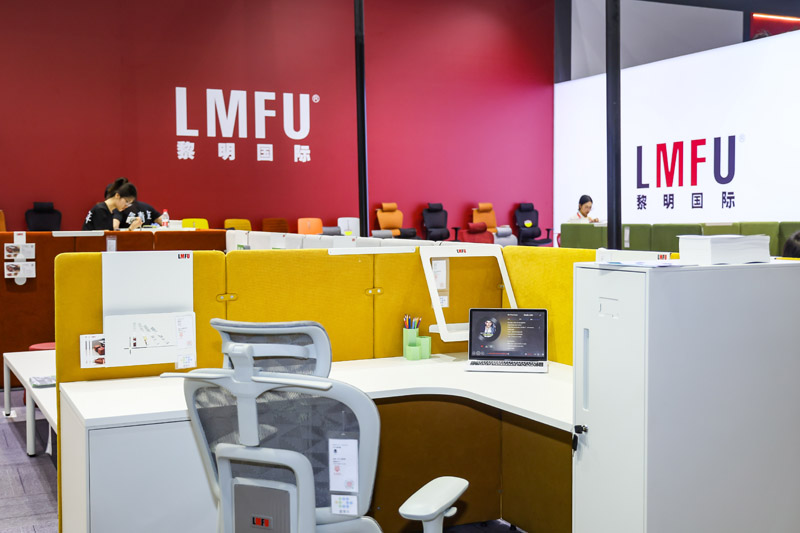
1. What Is the BIFMA Standard? Standard Scope & Technical Framework
BIFMA constitutes an extensive system of distinct test protocols and rating schemes. Many of these standards have undergone the ANSI consensus process and are formally recognised as American National Standards, commonly labelled ANSI/BIFMA standards. Core testing categories are outlined below:
1.Mechanical Safety & Performance Standards
- Evaluate resistance to tipping under defined load or tilt conditions (for example, preventing chair overturn when users shift position).
- Verify that seat pans, backrests, armrests and desktop surfaces do not fracture or develop permanent deformation under sudden impact or sustained heavy loading.
- Conduct cyclic durability tests on casters, chair bases, swivel assemblies, tilt mechanisms and drawer slides to simulate long-term, repeated everyday use.
2.Environmental & Sustainability Standards
This framework covers material selection, manufacturing energy consumption, human and ecological health, plus social responsibility. The derived LEVEL® certification (Tier 1, 2 and 3) delivers transparent, quantified third-party ratings for buyers to assess furniture’s environmental performance.
3.Chemical Emission Standard
Chemical Emission Standard(Furniture Emissions – BIFMA X7.1) Specifically developed to measure volatile organic compound (VOC) emissions from office furniture.
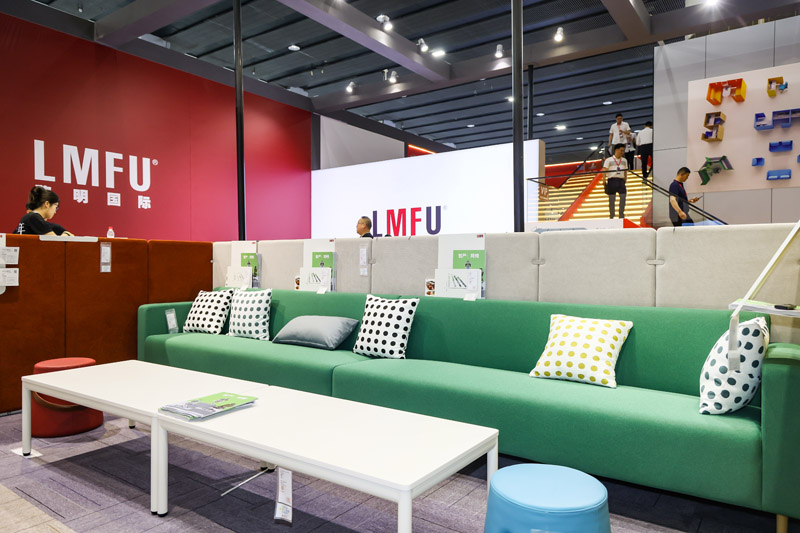
2. Why Choose BIFMA Compliant Furniture? Core Advantages
BIFMA (Business and Institutional Furniture Manufacturers Association) develops and maintains safety and performance standards for commercial and institutional furniture. The benefits of selecting BIFMA-compliant furniture include:
1.Rigorous Safety Assurance
Gas lift cylinders are a common source of workplace accidents. Poor-quality chairs may suffer sudden base failure, or desks can collapse, risking serious employee injury and exposing companies to costly workers’ compensation claims and litigation. BIFMA prioritises safety. Demanding tests for stability, static load capacity and impact resistance minimise the risk of on-site accidents.
2.Superior Durability & Long-Term Value
Furniture without third-party certification often develops loose hardware, structural failure or upholstery wear under repeated lifting, sliding and rotation. Businesses may face replacement costs within just one or two years after purchase, creating substantial hidden expenditure. BIFMA testing simulates years of heavy-duty use via tens of thousands of cycles of sliding, rotation and compression. Certified furniture delivers low failure rates and extended service life.
3.Ergonomic & Health Compliance
Poorly engineered desks and chairs contribute to chronic back pain from prolonged sitting, which negatively impacts staff attendance. Many ANSI/BIFMA standards define strict ergonomic baselines, regulating adjustment ranges, lumbar support, height travel and other critical metrics. Meanwhile, its environmental standards (such as BIFMA e3 / LEVEL® certification) effectively limit the release of hazardous substances.
4.Industry Recognition & Compliance Credential
Frequent repairs, after-sales support, relocation and premature replacement drain administrative resources and inflate total cost of ownership. For this reason, many professional purchasers favour certified products. Globally accepted as the benchmark for commercial furniture quality, BIFMA compliance is widely set as a mandatory tender requirement by architects, facility managers and corporate buyers.
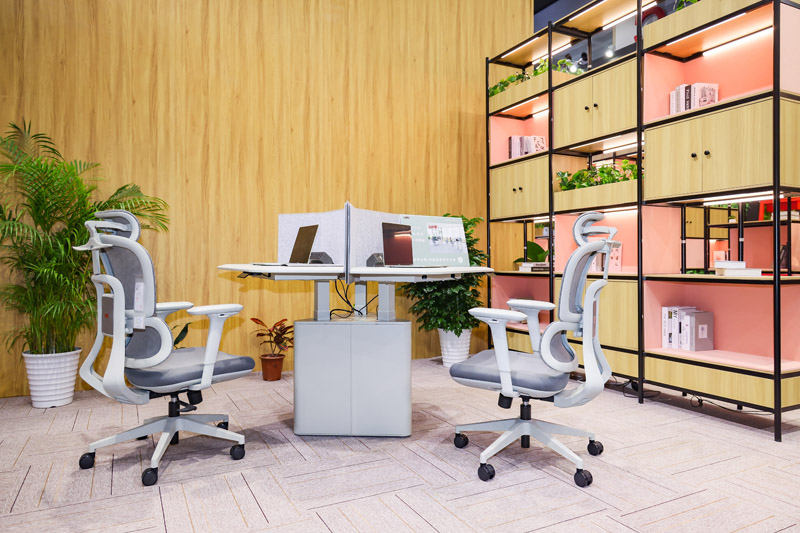
ANSI/BIFMA Core Sub-Standard Summary Table
| Standard Code | Applicable Furniture / Scenario | Core Test & Specification Highlights |
|---|---|---|
| ANSI/BIFMA X5.1 | General office chairs (mesh chairs, task swivel chairs etc.) | Stability, structural strength, caster and swivel cycle durability |
| ANSI/BIFMA X5.4 | Public, lounge and waiting-area seating | Impact resistance and frame durability in high-traffic environments |
| ANSI/BIFMA X5.5 | Office desks and workstations | Surface load capacity, drawer lifespan, lifting mechanism and structural stability |
| ANSI/BIFMA X5.6 | Panel and partition systems | Partition impact resistance, hanging load capacity and joint strength |
| ANSI/BIFMA X5.9 | Storage and filing cabinets | Slide durability, anti-tip interlocks, cabinet load rating and opening/closing cycles |
| ANSI/BIFMA X5.11 | Office chairs for larger body users | Up-rated load and fatigue testing for heavier users |
| ANSI/BIFMA X5.41 | Public seating for larger body users | High-capacity standard for heavy-use public spaces |
| ANSI/BIFMA X6.4 | Occasional / light-duty commercial seating | Performance specifications for light-use or infrequently operated commercial chairs |
| ANSI/BIFMA X6.5 | SOHO (small office/home office) furniture | Standards for desks, chairs and cabinets for home-based small offices |
| BIFMA X7.1 | Furniture chemical emission testing | Measurement of volatile organic compound (VOC) emission rates |
| ANSI/BIFMA e3 | Furniture sustainability standard | Environmental performance, ecological health and LEVEL® green certification grading |
| BIFMA X10.1 | Ergonomic guidelines for computer furniture | Ergonomic dimension specifications for a wide range of body types |
3. Comparison with Other Major International Furniture Standards
ANSI / BIFMA (North American Standard)
Markets: North America + global adoption Focus: Heavy-duty mechanical durability, safety testing and holistic environmental grading via LEVEL. High global recognition, granular quantitative test protocols; widely regarded as the gold standard for contract-grade commercial furniture.
EN Standards (European standards e.g. EN 1335 / EN 16139)
Markets: European Union Focus: Strict EU safety rules, ergonomic dimension requirements and broad environmental considerations. Partially overlapping with BIFMA. Some European physical dimension and ergonomic classifications are better aligned with European anthropometric profiles.
ISO Standards (International Organization for Standardization)
Markets: Worldwide Focus: Globally unified frameworks for quality, safety and management systems. Strong general applicability. For dynamic high-cycle testing specific to commercial furniture, BIFMA and EN contain more detailed and stringent test procedures than base ISO standards.
FAQs:Why Choose BIFMA Compliant Furniture?
How to verify the authenticity of a BIFMA certificate?
Genuine BIFMA test certificates are issued by accredited independent third-party laboratories (including SGS, BVCIS, UL and A2LA-accredited facilities). Reports carry official laboratory stamps and unique identification numbers. Request full English test reports mapped to relevant sub-standards (such as X5.1, X5.5) with lab IDs; validity can be checked via the issuing body’s official website.
Do small businesses with limited budgets need BIFMA certification for all office furniture?
Small businesses operating on tight budgets do not need full top-tier BIFMA certification across every furniture item. It is recommended to prioritise BIFMA-certified task chairs and electric height-adjustable desks. Cost-effective non-certified alternatives may be selected for low-frequency items such as guest chairs and side tables.
Reference:
[1] BIFMA. Standards Overview.
[2] BIFMA. Standards Short Descriptions.
[3] BIFMA. ANSI/BIFMA e3-2024 Furniture Sustainability Standard (Official PDF).
[4] BIFMA. BIFMA Compliant Program Introduction.
[5] BIFMA. LEVEL® Certification Program.
[6] BIFMA. ANSI Accreditation.
[7] BIFMA. Standards FAQs.
Disclaimer
This article is prepared for general educational and procurement reference only and does not constitute legal advice, engineering certification, or binding specification. All summaries, interpretations and simplified descriptions of ANSI/BIFMA standards are for illustration purposes only and shall not replace the complete, official published standard documents issued by BIFMA and ANSI. BIFMA standards are voluntary consensus standards rather than mandatory legal requirements¹³.
BIFMA itself does not perform laboratory testing or issue product certificates; compliance verification is conducted by ISO 17025-accredited independent third-party laboratories¹⁴. Product compliance status may change due to product revision or re-testing. Readers must verify test reports and certificates directly with the issuing accredited laboratory or BIFMA Compliant official registry before making procurement, tender or contractual decisions