
How to Choose the Right Chair for Seniors with Spinal Stenosis
2026-09-20
Unlike most older adults, seniors diagnosed with lumbar spinal stenosis require furniture tailored to their unique physical needs, with seating being particularly critical. Beyond seating choices, safe household setup is equally vital for ageing populations; readers may also refer to How to Arrange a Safe Home Environment for Seniors with Alzheimer's? for broader home‑safety planning for vulnerable elders.
For patients with lumbar spinal stenosis, forward flexion increases spinal canal volume and often eases symptoms. Clinical resources from the American Academy of Physical Medicine and Rehabilitation (AAPM&R) KnowledgeNow platform and the JAMA review article on lumbar spinal stenosis confirm that upright or reclined postures narrow the already compromised spinal canal further, frequently triggering or amplifying numbness and pain [1][2].
Seating choices should respect this physiological mechanism. Below is a structured guide for selecting appropriate chairs for seniors with lumbar spinal stenosis.
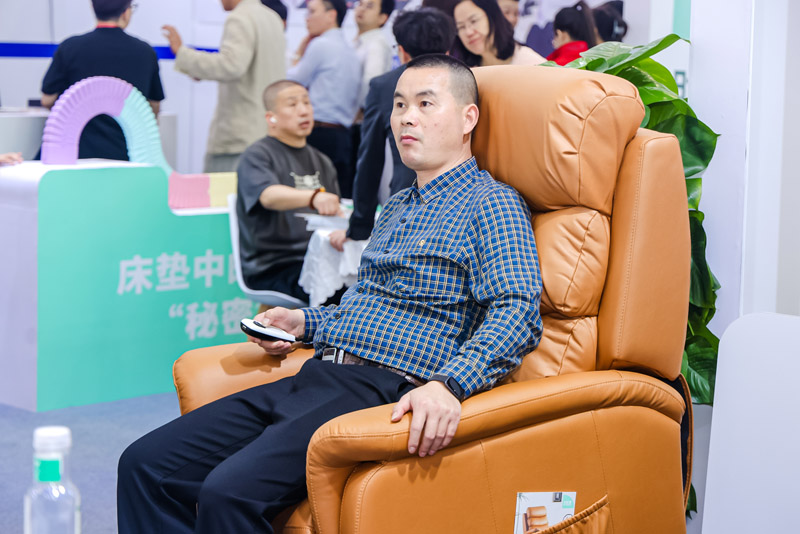
1. Core Guidelines for Choosing Chairs for Seniors with Lumbar Spinal Stenosis
1.1 Backrest and Lumbar Support: Mild Contour, Avoid Excessive Recline
Chairs should not be overly soft. Deep memory‑foam or ultra‑plush latex cushions are unsuitable, as body weight compresses these materials and forces prolonged lumbar strain. Equally important: avoid aggressive lumbar protrusions. Firm office‑style lumbar pillows that push the lower spine sharply forward force lumbar hyperextension, which shrinks the spinal canal and exacerbates stenosis symptoms [3].
Opt for backrests that follow the spine’s natural curvature. Cushions built with high‑density moulded foam or pocket springs topped by a firm base layer work best. The seat should encourage gentle, relaxed forward leaning rather than rigid upright extension. Material selection directly impacts comfort, durability and slip resistance. If comparing surface options across geriatric furniture, our article Best Furniture Materials for Elderly: Solid Wood, Metal vs. Impact-Resistant Upholstery breaks down pros and cons of common fabrics and structural materials.
For seniors with leg weakness or paraesthesia who tend to slide forward on smooth upholstery, select slip‑resistant woven linen or stain‑resistant performance fabrics. Higher surface friction prevents unexpected sliding that could strain the lumbar spine.
1.2 Seat Height and Knee Alignment: 90° Hip‑Knee Bend, Feet Fully Flat on the Floor
Improper seat height adds unnecessary lumbar loading. Seats that are too high leave feet dangling. Seats that sit too low demand heavy trunk effort during standing, raising the risk of sudden lumbar strain. Zero‑gravity recliners and massage chairs that drastically elevate both the backrest and leg rest are generally contraindicated for this patient group.
The ideal chair allows the senior’s knees to bend at roughly 90°, thighs parallel to the ground, and both feet planted fully flat on the floor. If purchasing an adjustable recliner, confirm it supports minor forward tilt to permit hip angles slightly greater than 90°. Clinical rehabilitation seating often incorporates a wedge cushion angled 3°–5°, sloping gently downwards toward the front; this design benefits patients who develop lumbar discomfort immediately after sitting down [4].
1.3 Seat Depth and Armrests for Safe Sit‑to‑Stand Transfers
Sturdy, appropriately tall armrests are mandatory. Arm supports distribute weight away from the lumbar spine when standing and reduce fall risk.
Avoid excessively deep seat pans. If the rear edge of the seat presses behind the knees or the user must slide all the way back to place feet on the ground, the lumbar region hangs unsupported and bears abnormal tension.
Whenever feasible, shop in large physical furniture showrooms or source products from manufacturers specialising in geriatric furniture. For buyers sourcing commercial‑grade seating for care facilities, Top 8 Elderly-friendly Furniture Manufacturers Specializing in Nursing Home & Home Senior-Care and Top 11 Medical Furniture Manufacturers in China: Chairs, Cabinets, Sofas & Casters offer curated supplier lists covering chairs, storage units, sofas and mobility casters. These suppliers typically develop seating built around older adults’ ergonomic and safety requirements.
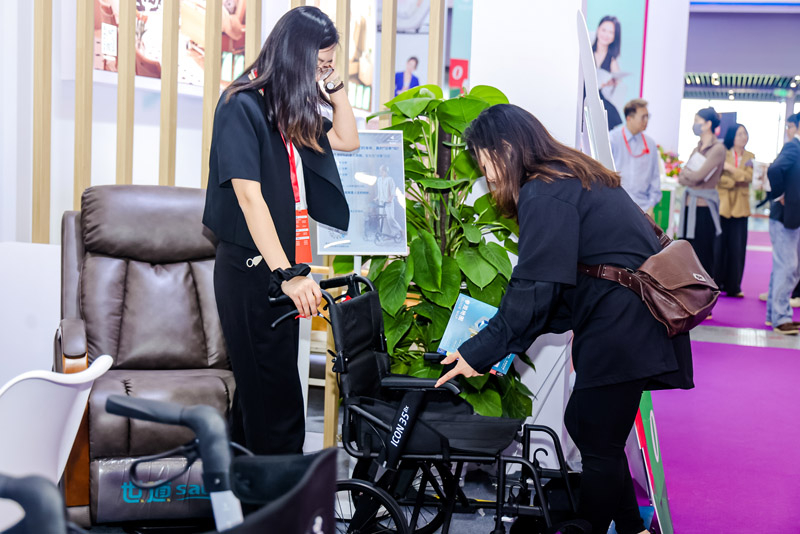
2. Recommended Chair Types for Different Scenarios
Casual seating / TV viewing: Medium‑high back single recliner with optional footstool
Large, soft sofas with deep cushions trap users, making standing difficult — a major hazard for those with spinal stenosis. Choose a medium‑high back standalone chair with moderate firmness and minimal sink‑in. A low footstool may improve comfort by slightly elevating the legs. Note that shorter adults may struggle to maintain correct knee angles if the seat height is standardised and paired with a footrest.
Dining / reading: Stable solid‑wood chairs
Lightweight plastic chairs pose high fall injury risk. Select heavier, well‑balanced dining chairs with anti‑slip feet and built‑in armrests. For armless dining chairs, add a thin lumbar pad behind the lower back for gentle support.
Bathing: Height‑adjustable shower chair with backrest and armrests
Falls are especially dangerous in wet bathroom environments. A height‑adjustable shower chair with back support and armrests lets seniors bathe while seated, cutting fatigue and fall risk.
Environmental considerations
Position chairs in uncramped spaces. Leave ample clearance on both sides and in front to accommodate walkers or caregiver assistance. Avoid thick, shaggy rugs nearby; raised rug edges can trip users pushing upward from a seated position.
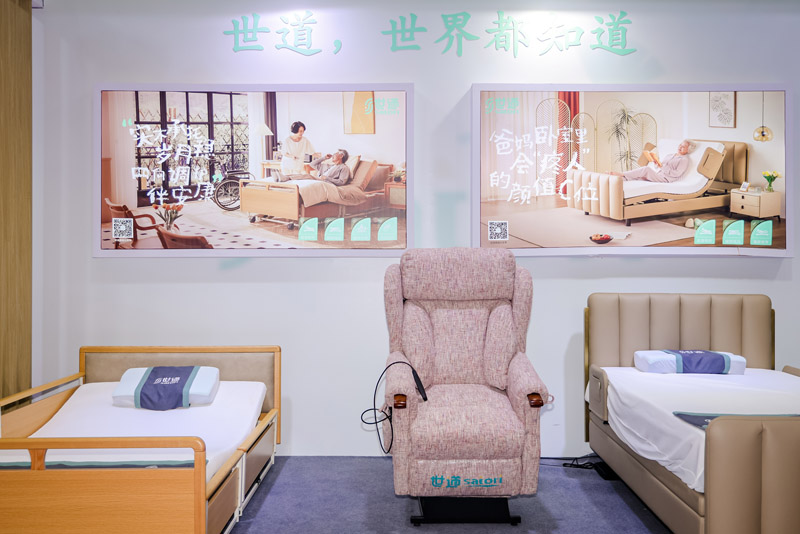
3. In‑Store Sit‑to‑Stand Practical Test
When trialling chairs in‑person, perform a controlled sit‑and‑rise assessment:
- Sitting phase: Check whether the senior lowers themselves smoothly. Confirm knees rest near 90° and feet stay planted firmly on the floor.
- Standing phase: Watch if the user can push evenly with both arms, lean forward gently, and rise without obvious lumbar twisting or pain. Chairs that force backward arching or require painful effort to stand are unsuitable.
4. Chairs to Avoid
❌ Bean bags and ultra‑soft lounge sacks: These collapse around the body, distort spinal alignment, overwork stabilising muscles and create extreme difficulty rising.
❌ Stools without armrests: Without leverage points, standing relies almost entirely on lumbar muscle effort, accelerating symptom progression and increasing fall risk.
❌ Over‑deep seat pans: Prevent proper back contact, leaving the lumbar spine suspended and under constant load.
5. Daily Usage Advice
Healthy sitting habits reduce symptomatic flare‑ups. A slight forward lean or resting hands loosely on the knees can open the spinal canal and ease leg numbness and discomfort.
Never stand abruptly. Teach the senior to shift forward toward the seat edge first, grip the armrests, tilt the trunk forward slightly, then push upward using leg and arm strength.
For severe stenosis marked by neurogenic claudication or radiating leg pain, consult the treating physician or licensed physical therapist before purchasing specialised seating [5].
References
[1] American Academy of Physical Medicine and Rehabilitation. KnowledgeNow: Clinical Summary — Lumbar Spinal Stenosis. AAPM&R; 2023.
[2] Lurie J, Tomkins‑Lane C. Lumbar spinal stenosis: a review. JAMA. 2021;325(12):1188‑1198.
[3] Jacobs WC, van der Gaag N, de Kleuver M. Lumbar spine loading during different sitting postures: an ergonomic review. European Spine Journal. 2020;29(7):1561‑1572.
[4] O’Sullivan P, Dankaerts W. Wedged seat tilting for neurogenic claudication in lumbar stenosis: biomechanical rationale. Journal of Orthopaedic & Sports Physical Therapy. 2019;49(5):324‑331.
[5] American Geriatrics Society. Geriatric musculoskeletal care guidelines for spinal stenosis management. Journal of the American Geriatrics Society. 2022;70(8):2312‑2322.
[6] Rainville J, Suri P. Non‑operative management of lumbar spinal stenosis in older adults. Physical Medicine and Rehabilitation Clinics of North America. 2021;32(3):597‑614.
[7] Katz JN, Harris MB. Clinical practice: lumbar spinal stenosis. New England Journal of Medicine. 2020;382(15):1435‑1444.
[8] International Society of Physical and Rehabilitation Medicine. ISPRM consensus statement: seating prescription for spinal neurogenic conditions. Journal of Rehabilitation Medicine. 2023;55(4):1‑10.
Legal Disclaimer
This document provides general educational guidance on ergonomic seating selection and is not a substitute for personalised medical evaluation, clinical diagnosis, or treatment advice from a qualified physician, physical therapist, or rehabilitation specialist. Individual spinal anatomy, stenosis severity, comorbidities, mobility status and pain triggers vary widely between patients. No chair recommendation herein constitutes medical certification or therapeutic guarantee. Always consult the senior’s treating clinical team prior to purchasing adaptive seating. The publisher accepts no liability for injury, exacerbation of symptoms or adverse outcomes arising from furniture choices made based solely on this guide.